


Lily’s Garden - Design & Relax
4.6134.75K Reviews
App Specs
- Version
- 3.80.0
- Updated On
- License
- Free
- Downloads
- 50,000,000+
- Developer
- Tactile Games
- Categories
- Puzzle
- Platform
- Android
Screenshots






 Analysis by AppCompare
I like puzzle games that are easy to pick up without demanding a whole free evening, and Lily’s Garden gets that balance mostly right. A quick round gives me something to do immediately, while the garden renovation and ongoing story give me a reason to return later. It is a free puzzle game from Tactile Games, rated for Everyone, and its cheerful presentation makes it an approachable choice for a relaxed break.
The appeal is not just matching tiles. A level feeds into a larger loop of earning stars, choosing what to improve, and seeing a neglected garden change over time. That connection gives each puzzle a visible purpose, which I find more satisfying than playing a string of levels with no setting or progress to care about.
A good fit for small pockets of time
The game works well when I have a few spare minutes: while waiting for someone, taking a short break, or winding down before bed. The basic match-three idea is familiar enough that I can get started without studying a complicated rule set. I can focus on the board, finish a level, and then decide whether I want to spend another moment on a garden task or leave the story for next time.
That straightforward rhythm is also a useful contrast with puzzle games built around one self-contained challenge at a time. Those can be better when I want a brain teaser with a clear endpoint. Here, the appeal is the combination: the board provides the immediate activity, while the renovation and narrative supply a longer thread. If you mainly want difficult logic puzzles and little else, this is probably not the strongest match.
How the story and design keep progress personal
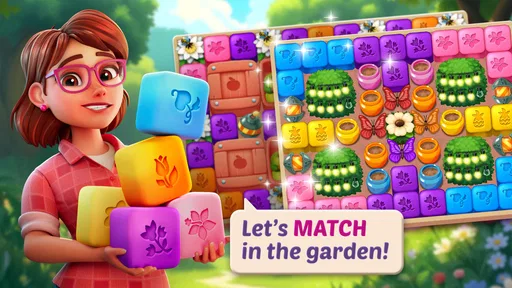
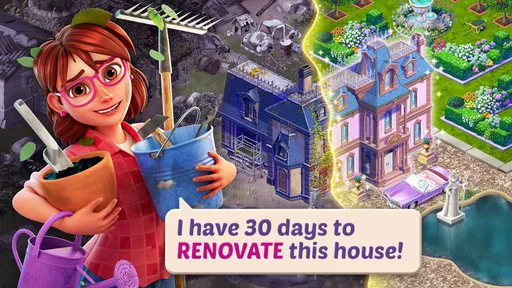
So, what’s the deal with Lily’s Garden? At its core, this is a match-3 puzzle game, but it’s not just about lining up pretty tiles. You’ll be helping Lily renovate her great-aunt’s garden, transforming it into a blooming paradise. And let me tell you, the storyline is surprisingly engaging. Who knew garden gossip could be so juicy?
The puzzles themselves are quite intuitive. You swap tiles to match three or more of the same kind, earning points and progressing through levels. Each puzzle you solve earns you stars, which you then use to complete tasks around the garden. It’s a simple yet effective game loop that keeps you coming back for more.
The Design Element
This isn’t just about puzzles—think of it as your personal garden makeover show. You get to choose from a variety of design options for each area of the garden. Whether you want a rustic feel or something more modern, the choice is yours, and it’s super satisfying to see your vision come to life.
Worth Reading Before You Choose

Flipboard Shows What News Apps Must Do Beyond the Feed

Switching to Android Auto Means Rethinking Your Driving Routine

Google Calendar Makes a Crowded Week Easier to Manage

Ludo King Makes the Most of the Minutes Between Plans

Baby Panda World Brings Quick Play to Modern Phones, but Its Game Library Feels Busy

ESPN’s Live Game View Makes Following Close Games Easier
As you progress, you’ll unlock new areas to renovate. Each comes with its own set of challenges and design options. It’s like being on a never-ending home makeover journey, and honestly, who doesn’t love a good before-and-after?
Small-session strategy and a fair warning
A helpful way to approach the game is to treat each level as a small decision-making exercise rather than rushing every move. I try to look for matches that open up more possibilities on the board, then use the star reward as a natural stopping point: finish a puzzle, make a garden choice, and put the phone down. That keeps the session feeling complete instead of turning a short break into an aimless run of levels.
When a board is proving stubborn, I would pause before spending on a booster or extra moves. In-app purchases range from $0.99 to $99.99 per item, so it is worth deciding in advance whether optional spending fits your habits. The game is free to start, but that does not mean every player will find later progress equally comfortable without paying. Patience is a real alternative to purchases, though it may mean accepting a slower pace.
It is also worth knowing what kind of “relaxing” this is. The garden, bright visuals, and story make the overall tone gentle, but a puzzle can still be frustrating when the board does not cooperate. If you want an activity with no pressure to retry or think ahead, a quiet decorating app may suit you better. If you enjoy a little challenge as the price of earning each renovation step, the mix is more appealing.
Returning without losing the thread
The story gives the game a useful reason to come back after a break: there is a continuing character and a garden that changes as you complete tasks. For a practical routine, I would play a level or two during a commute wait or between household jobs, then stop when I reach a point where I can see what the next star will contribute. That makes it easier to pick up again without needing a long uninterrupted session.
For a first-time player, the important question is whether the narrative and makeover choices feel like rewards or distractions. If you only want to clear boards as efficiently as possible, the story tasks may feel like an extra layer between you and the next puzzle. I enjoy having that context, but players who prefer a pure match-three format may find a simpler puzzle game more direct.
What the numbers say about its audience
The game has a 4.6 average from 1.5 million ratings, with 135,000 written reviews and more than 50 million installs. Those figures suggest it has reached a broad audience, though popularity does not guarantee that its particular blend of puzzles, garden choices, and melodrama will click for everyone. Tactile Games has kept the current version at 3.54.0, and the game runs on Android 6.0 or later.
Its Everyone age rating makes it an accessible option to consider for a shared household device, but I would still keep the purchase model in mind if children may play. The game is free, while optional in-app purchases are available; agreeing on a simple rule about spending before handing over the phone avoids surprises. The rating describes age suitability, not whether every family will want the same approach to purchases or screen time.
Unpacking the Gameplay
So, what’s the deal with Lily’s Garden? At its core, this is a match-3 puzzle game, but it’s not just about lining up pretty tiles. You’ll be helping Lily renovate her great-aunt’s garden, transforming it into a blooming paradise. And let me tell you, the storyline is surprisingly engaging. Who knew garden gossip could be so juicy?
The puzzles themselves are quite intuitive. You swap tiles to match three or more of the same kind, earning points and progressing through levels. Each puzzle you solve earns you stars, which you then use to complete tasks around the garden. It’s a simple yet effective game loop that keeps you coming back for more.
The Design Element
This isn’t just about puzzles—think of it as your personal garden makeover show. You get to choose from a variety of design options for each area of the garden. Whether you want a rustic feel or something more modern, the choice is yours, and it’s super satisfying to see your vision come to life.
As you progress, you’ll unlock new areas to renovate. Each comes with its own set of challenges and design options. It’s like being on a never-ending home makeover journey, and honestly, who doesn’t love a good before-and-after?
Relaxation and Storytelling
Now, let’s talk about the vibe. Lily’s Garden is all about unwinding. The game has a nice, calming soundtrack that sets the mood for a chill gaming session. Plus, the graphics are vibrant and charming, making the whole experience visually pleasing.
But what really sets this game apart is its storytelling. Lily’s life is filled with ups and downs, and you’re along for the ride. The characters are quirky, and the dialogues are witty. It’s like reading a light-hearted novel, with each level revealing more of the plot.
In-App Purchases and Ads
Okay, let’s address the elephant in the garden—the in-app purchases. Yes, they exist, but they’re not too intrusive. You can buy extra moves or boosters if you’re stuck, but with a little patience, you can progress without spending a dime.
Ads are present but mostly optional. You can watch them to earn extra rewards, which is a nice touch if you’re looking to advance faster without opening your wallet.
When the cosy loop starts to feel repetitive
The main trade-off becomes clearer the longer you play: the match-three board is the repeatable engine, while the story and garden provide variation around it. If matching tiles is already your comfort-game habit, the familiar mechanics can be reassuring. If you tire quickly of repeating a core puzzle format, fresh dialogue and decorating decisions may not be enough to keep every session feeling new.
I would also separate the game’s two kinds of satisfaction. Choosing how an area should look is a personal, low-pressure reward; beating a difficult level is more about persistence and planning. The first can make progress feel warm and expressive, while the second can interrupt that calm. A useful test is to notice which part you look forward to more after a session. If the garden choices are the draw, the puzzle grind is a cost you should be willing to accept.
For a casual player, the most practical approach is to avoid treating every available moment as a reason to keep going. Play when the board itself sounds fun, and stop when it stops being pleasant. The story gives you a thread to return to, but there is no need to turn a light pastime into a task list. That distinction matters especially for people who use games to decompress rather than to chase completion.
Who will enjoy it—and who may not
I would recommend it to someone who likes colourful match-three puzzles, enjoys having a longer story to follow, and wants small bursts of play to contribute to a visible makeover. It can also suit a player who likes making aesthetic choices but wants those choices attached to puzzle progress rather than decorating freely from the start. The blend gives the game more personality than a bare sequence of boards.
I would steer away from it if your priority is uninterrupted narrative, advanced strategic puzzles, or decorating without having to clear levels first. It is also a less natural fit for anyone who dislikes purchase prompts or feels tempted to spend when a level becomes difficult. The free entry point is convenient, but setting a personal spending boundary helps keep the game casual rather than frustrating.
Compared with a pure match-three alternative, this one asks you to invest in Lily’s story and the garden between boards. Compared with a dedicated home-design game, it makes puzzle wins the route to visual progress. Neither approach is automatically better; the right choice depends on whether you want the board, the story, or the makeover to be the main event.
Relaxation and Storytelling
Now, let’s talk about the vibe. Lily’s Garden is all about unwinding. The game has a nice, calming soundtrack that sets the mood for a chill gaming session. Plus, the graphics are vibrant and charming, making the whole experience visually pleasing.
But what really sets this game apart is its storytelling. Lily’s life is filled with ups and downs, and you’re along for the ride. The characters are quirky, and the dialogues are witty. It’s like reading a light-hearted novel, with each level revealing more of the plot.
In-App Purchases and Ads
Okay, let’s address the elephant in the garden—the in-app purchases. Yes, they exist, but they’re not too intrusive. You can buy extra moves or boosters if you’re stuck, but with a little patience, you can progress without spending a dime.
Ads are present but mostly optional. You can watch them to earn extra rewards, which is a nice touch if you’re looking to advance faster without opening your wallet.
Final Thoughts
All in all, Lily’s Garden is a delightful blend of puzzle-solving and creative design. It’s a perfect pick for those moments when you just want to relax and indulge in a bit of escapism. The combination of engaging gameplay, charming graphics, and a captivating storyline makes it a standout in the sea of mobile games.
Whether you’re a seasoned puzzle aficionado or a casual gamer, there’s something in this garden for you. So why not give it a whirl and see how green your thumb really is?
My overall take is that Lily’s Garden is best when I approach it as a pleasant, optional ritual rather than a game I need to clear quickly. Its strongest point is the way a short puzzle can feed into a visible garden change and a continuing story; its weakest is that the same loop can become familiar, and a difficult board may make a supposedly relaxing break feel less restful. I would try it if that mix sounds appealing, but choose a pure puzzle or free-form decorating game if either of those is what you really want.
Pros
- Captivating storyline keeps you engaged.
- Beautiful graphics with vibrant colors.
- Frequent updates with new content.
- Relaxing gameplay to unwind.
- Intuitive and easy controls.
Cons
- In-app purchases can be expensive.
- Energy system limits playtime.
- Requires a stable internet connection.
- Some levels can be quite challenging.
- Advertisements can be intrusive.
FAQs for Lily’s Garden - Design & Relax
What is the main objective of Lily’s Garden?
Lily’s Garden is a match-3 puzzle game where the primary goal is to help the protagonist, Lily, renovate her aunt’s garden. Players solve puzzles to earn stars, which can be used to complete various garden tasks and unlock new areas. The game combines engaging storytelling with challenging puzzles.
Is Lily’s Garden free to play?
Yes, Lily’s Garden is free to download and play on both Android and iOS devices. However, it includes in-app purchases that can enhance gameplay by allowing players to buy additional lives, boosters, or currency to progress faster. These purchases are optional and not necessary to enjoy the game.
What makes Lily’s Garden unique compared to other match-3 games?
Lily’s Garden stands out with its rich storyline and character development, which adds depth to the gameplay. Unlike typical match-3 games, it offers a narrative-driven experience, where players follow Lily’s personal journey and interact with diverse characters. The combination of storytelling and puzzle-solving keeps players engaged.
How often are new levels and updates released in Lily’s Garden?
The developers of Lily’s Garden frequently update the game with new levels, events, and features to keep the experience fresh and engaging. Updates generally occur monthly, so players can expect a steady stream of new content and challenges. These updates also include bug fixes and performance improvements.
Can Lily’s Garden be played offline?
Lily’s Garden requires an internet connection to download new content, updates, and to sync progress across devices. However, some gameplay features may be accessible offline after initial download. For the best experience and to ensure progress is saved, it’s recommended to play while connected to the internet.


